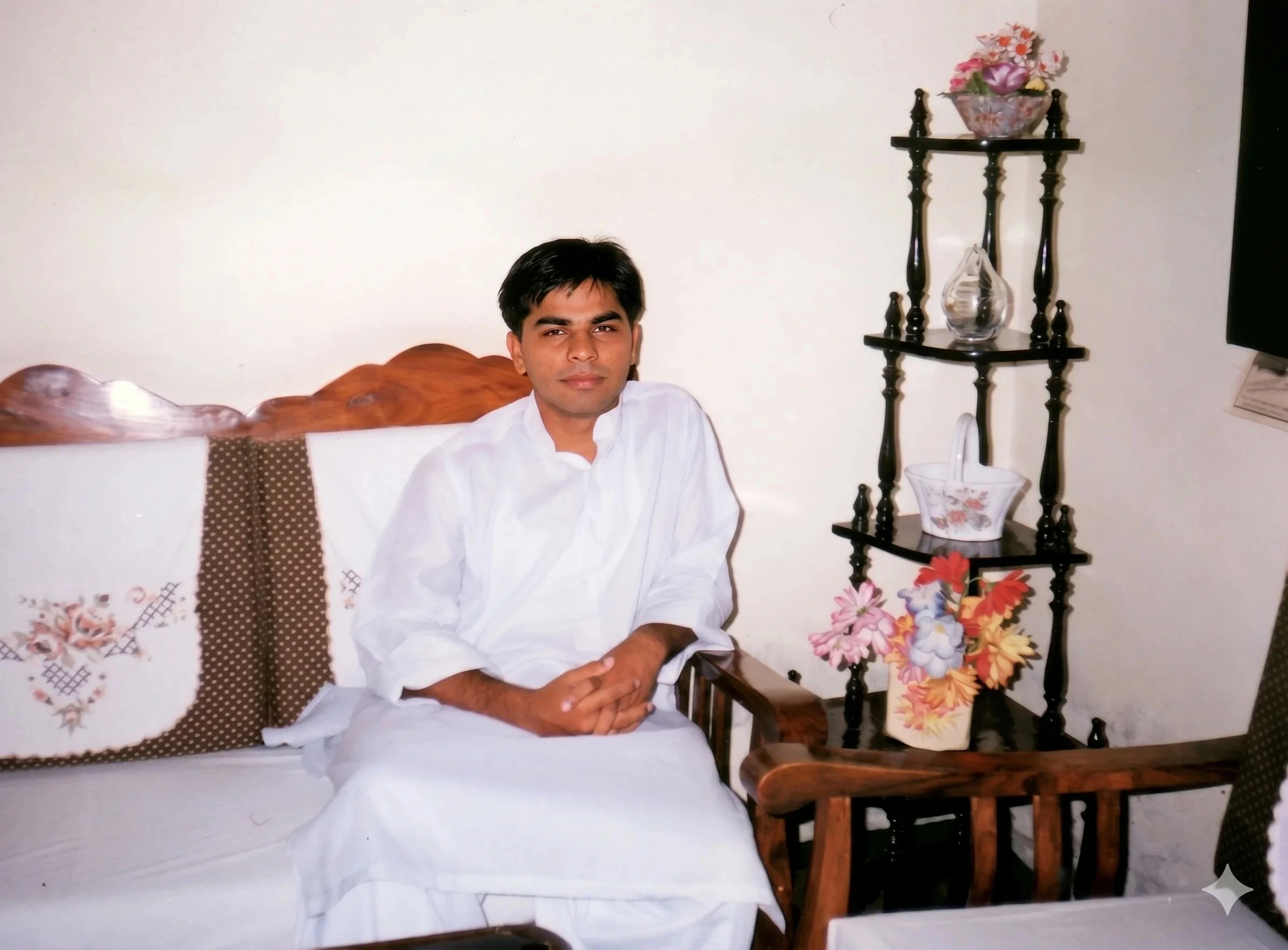
By the time I reached the final semester of my Master’s in Computer Science, I had already given my father something back – a 3.85 GPA, Dean’s Merit List, a full scholarship he hadn’t expected and I hadn’t predicted. He had made a bet on a son with unremarkable grades and no guarantees, and the bet had surprised us both. But this piece isn’t about the scholarship. It’s about what happened in the last semester – with a project that earned a B, and deserved an A+ the world wasn’t ready to give.
The Advisor’s Challenge, and What We Said Instead
In early 2002, final semester at ILM / Hamdard University, Lahore. Our advisor – testing us, perhaps – suggested we build an online version of Microsoft Office. Web-based Word, Excel, PowerPoint. This was 2002. Microsoft Office was untouchable. The idea seemed not just difficult but absurd. We laughed, and said no.
We wanted something more ambitious. Something that hadn’t been built yet. An Intelligent Trip Planner.
The concept was clear to describe and extraordinarily difficult to execute: a user provides travel dates, budget, destination preferences, and travel party details. The system thinks – not just looks up, but reasons. It generates a complete, optimised itinerary: visiting spots, hotels, transport routes, feasibility analysis, an interactive map. Two modes – one where the user drives the choices, one where artificial intelligence drives everything.
We called Feature 5.2 System Intelligence Oriented Trip. The system would “plan their Trip with its intelligence Feature.” That phrase – written in a 22-page Software Requirements Specification in April 2002 – is the most important sentence in this story.
What AI Meant in 2002
The word AI in 2002 did not mean what it means today. There was no ChatGPT to ask for an algorithm. No YouTube tutorials on machine learning. No Stack Overflow thread explaining constraint satisfaction or pathfinding. No API to call. No pre-trained model to fine-tune. No framework that handled the hard parts.
What there was: expensive textbooks. Research papers behind paywalls or physically unavailable in Lahore. A handful of academic courses that taught theory without the applied context to bridge it to a working system. Three engineers in their early twenties building from first principles – intelligent scheduling logic, route optimisation, constraint-based planning – with the tools of 2002.
The knowledge gap was real. Not because we lacked capability, but because the field itself was immature for consumer applications. Neural networks existed in research. Expert systems existed. Implementing them reliably, in a web application, within a semester deadline – that was a different problem entirely. We weren’t students who refused to try. We were engineers who reached the boundary of what was then teachable, and tried to cross it anyway.
We Were Not Fools. We Were Just Early.
The algorithms didn’t cooperate. The semester deadline arrived. The examiner was direct: in its current state, this project is a failure. We asked for an extension. It was not granted. We removed the AI component – the entire reason the project existed – and submitted what remained. A trip planner without intelligence. An A+ concept that became a B.
The irony is specific and worth naming. Our advisor had suggested we build an online Office suite. We had laughed. Google Docs launched in 2006 and went on to reshape how hundreds of millions of people work. Our own idea was equally correct – the world just needed more time to catch up to it.
The Disconnect That Hurt More Than the Grade
The failing grade was not the wound. The wound was more structural.
If three engineers today produced an SRS like ours, something different would happen. A professor would know an alumnus at a startup. A university incubator would run a cohort. An accelerator would review early-stage ideas. A pitch competition would offer runway. Someone, somewhere in the system, would say: this is a genuine product vision. Let’s find a way to develop it.
In Lahore in 2002, none of that infrastructure existed. The examiner’s job was to grade a semester project. The university’s job was to award degrees. There was no mechanism – no bridge – between student builds interesting thing and interesting thing becomes something real.
We weren’t just students who failed a project. We were engineers with a specific, defensible product vision and a correctly identified market gap – with no path to take it further. I don’t say this with bitterness. I say it as a clear-eyed observation about what an ecosystem is, and what it isn’t. The infrastructure that connects university ideas to startup funding took another decade to begin forming. We were simply born into the gap.
What If Someone Had Seen the SRS?
What if one senior engineer had read our requirements document? What if TDCP – our named stakeholder – had actually engaged? What if someone had said: don’t submit this as a semester project. Submit it as a proposal. We’ll help you find the next step. That sentence was never spoken. But I think about it still.
The Advice That Survived Everything Else
The night we submitted the stripped-down project, I called my father. I told him what had happened – the failure, the removed feature, the grade. He didn’t deliver a speech. He gave me a principle:
Speak the truth with your examiner, even if it means failing the project. Never lie about a functionality that doesn’t exist.
That sentence has followed me through every job, every system I have built, every incident I have faced, every demo I have given. The instinct to over-promise – to present a system as more complete than it is, to smooth over the gap between the vision and the reality – is one of the most persistent pressures in our industry. My father named it when I was twenty-three, with no background in software architecture, and he was completely right.
He had made a gamble on me six years before this project. A bet on a son with unremarkable grades and no obvious guarantees. The gamble paid off not in the grade – but in the principle that emerged from the failure.
What I Tell My Sons
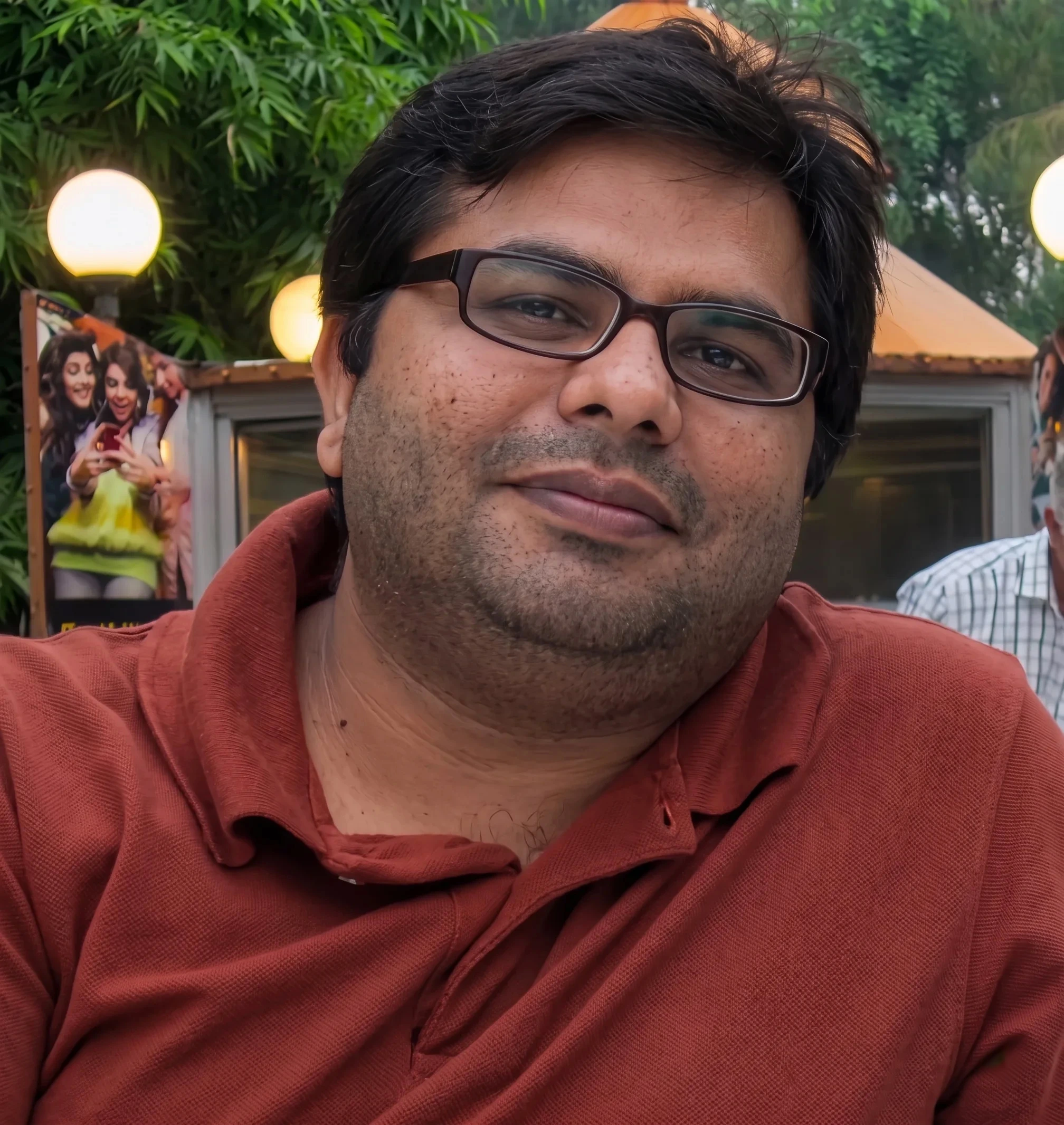
In 2017, my three sons were eight, six, and four years old. They will build things the world isn’t ready for. They will have ideas that feel ahead of their time because they are. They may face examiners who don’t see it, systems that don’t reward it, ecosystems that haven’t yet built the bridge between the vision and the runway.
What I want to tell them – what I wish someone had told us – is this: the idea doesn’t die when the grade does. Document the thinking. Hold the vision. Be honest about what doesn’t work yet. The tools catch up. The world catches up. Twenty years from now, someone will build exactly what you were imagining – or you will build it yourself, with better tools and a clearer map.
My father taught me to be honest about what doesn’t work. I want to teach my sons to be equally honest about what does – even when the world can’t see it yet.