At 7:14 one recent morning, my phone told me Danish had left the house. Mustafa followed at 7:16, Harris at 7:27. By 7:59 all three had reached school, each arrival a small grey line in an app called Family Link. To anyone glancing over my shoulder it looks like a delivery-tracking screen, except the parcels are my sons. To me, on most mornings, it is the most quietly moving thing I will read all day.
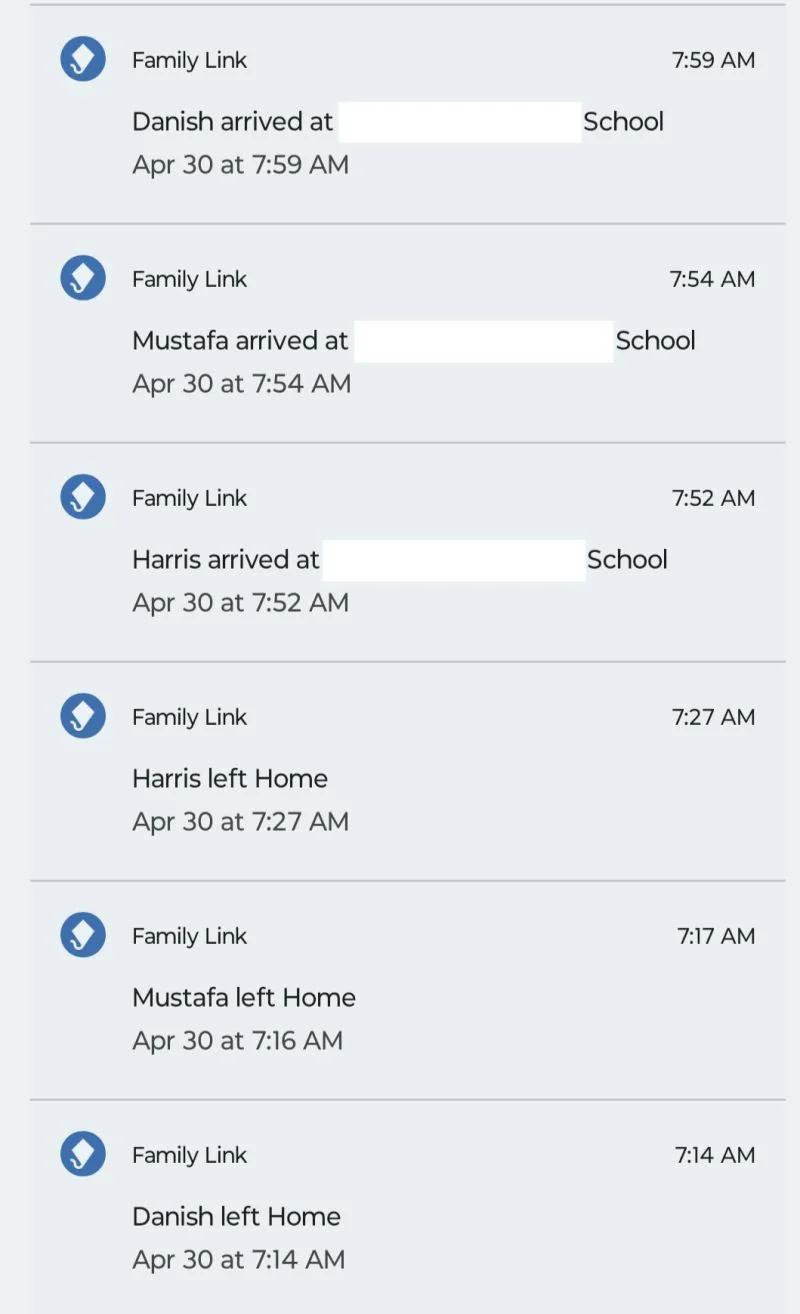
My wife and I watch that timeline fill in the way you watch weather: with a gratitude we rarely say out loud. Behind those timestamps is something I did not expect parenting to be mostly about. Not safety. Trust, and the slow work of handing a life back to the person it belongs to.
Freedom You Can Feel the Edges Of
We run two apps, not one. Google Family Link and Microsoft Family Safety sit quietly in the background of our home. They tell us when a son leaves or reaches school. They let us set screen-time limits and content controls, tuned to each age, because a thirteen-year-old and a seventeen-year-old do not get the same internet any more than they get the same bedtime.
The point was never to know where they are every second. It is to give them room to move inside boundaries they can actually feel. The boundary is what makes the freedom usable. Remove it too early and freedom just becomes risk wearing a nicer word; leave it in place a little too long and you teach a child to wait for permission instead of forming judgment. The whole craft of it is loosening the edges at roughly the speed they grow.
We Are Raising Explorers
Our job is not to raise rule-followers. We are raising explorers: young people who have to work out who they are, why they are here, and what they are for. A rule a child only obeys will not survive the first real morning nobody is there to issue it. What survives is judgment, and judgment is built the only way it can be, by being handed real decisions early and being allowed to get some of them wrong.
All three boys attend Gymnasium, the academic track in the German school system: selective, rigorous, and unapologetically demanding, built to lay a foundation for university and for whatever a young mind decides to chase after it. The structure around them is strict, and I am glad of it. What we try to protect underneath that structure is the exploring, the part no curriculum grades.
The PlayStation We All Agreed On
We set goals together. Not targets handed down from above, but goals we talk through and then chase as a family. The setting matters more than the hitting, because how a person chooses a goal says more about them than whether they reach it, and watching the boys choose is how I learn what is actually going on in their heads.
Not long ago they hit a set of goals we had agreed on months earlier. The reward, promised in advance and written into the deal, was a PlayStation 5. They met the terms. We kept our word. The console arrived, and so did the lesson sitting underneath it: a promise kept is a lesson taught, and children audit our follow-through far more closely than our advice.
- Set the goal together.
- Meet it.
- Show the result, in the open.
- Take the reward, exactly as promised.
- Then believe, learn, and begin again.
There are no grand expectations stapled to any of it. Just purposeful growth, and the quiet discovery that life tends to reward the same things a family can practise at the kitchen table: clarity about what you want, and the consistency to keep showing up for it long after the novelty wears off.
Guides, Not Generals
My wife and I think of ourselves as guides rather than generals. We give a direction and let them find their own way to the far end of it. We try to grow what already lives in them rather than press them into a shape that was never theirs, which is the kind of teaching that works before any formula does.
So they are the decision-makers in their own lives, earlier than is entirely comfortable for me. Life will not always be clear. At every crossroads there are dilemmas and distractions, and the honest truth is that there is rarely a single correct answer waiting to be uncovered. There is only the right context: a choice made with integrity and a clear sense of what you genuinely value. We put words to exactly that one evening I will not forget, when I asked them three questions they could carry into any decision.
Truthfulness and openness, I have come to believe, are not produced by control. They grow in the space you open up when you trade a little authority for a lot of responsibility, and then refuse to punish the honesty that comes back to you.
Three Countries, One Identity
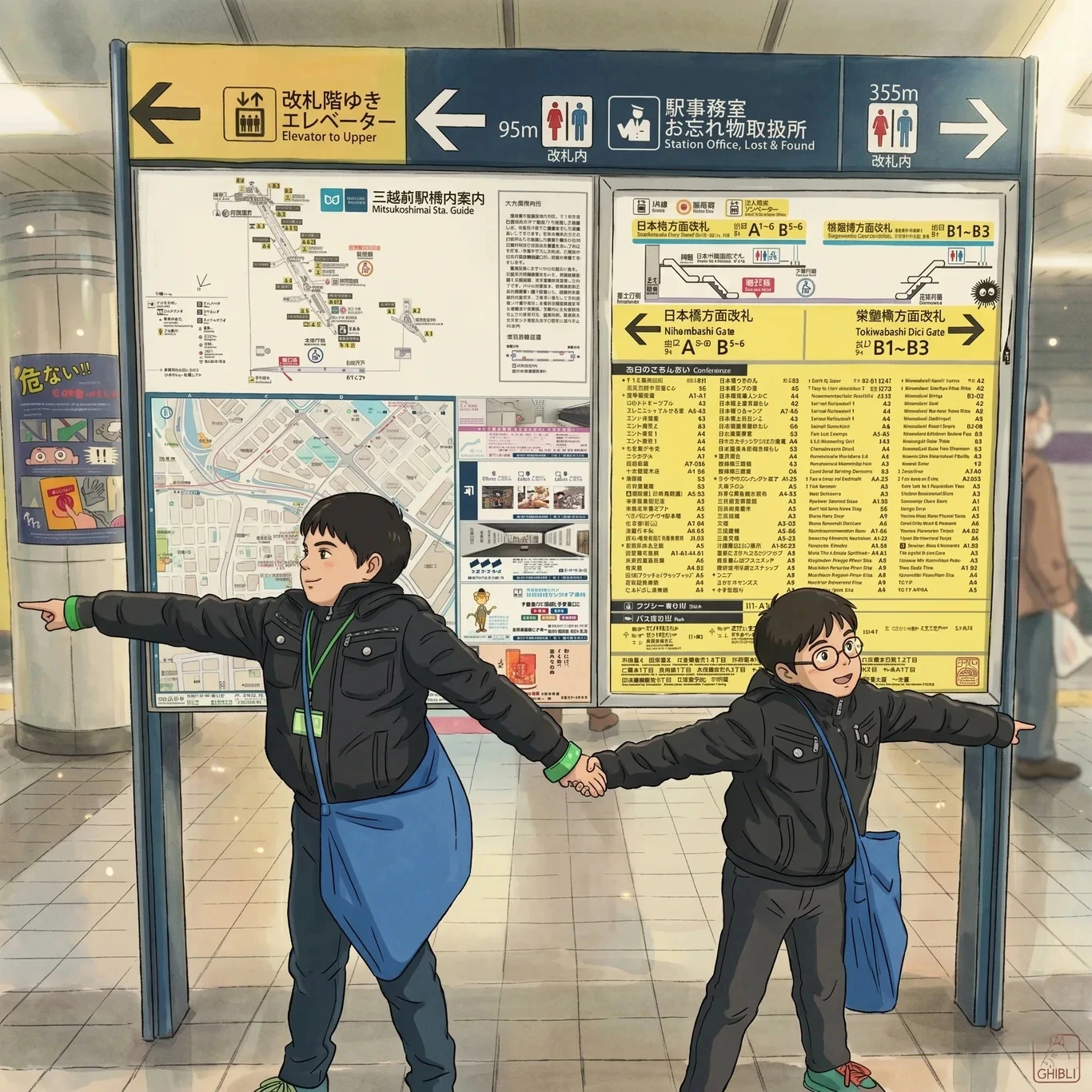
I have lived this question in three places. Pakistan gave me empathy, family bonds, resilience, and faith, the roots I still travel with everywhere. Japan, where I spent three years, gave me order, cleanliness, punctuality, and a respect for time I had never been formally taught and could not unlearn afterward. Germany, where we live now, gave me structure, the rule of law, and an engineering precision I recognise in the very school my sons attend. Tokyo in particular rewired how I see the ordinary.
The gift, and the genuine challenge, is to weave those threads into one identity my children can wear with pride, instead of three half-fitted ones pulling in different directions. They are growing up German at school, Pakistani at the dinner table, and quietly Japanese in a dozen habits they will never trace back to a country. I want them to feel that as wealth, not as a question they have to keep answering for other people.
The Morning the Timeline Goes Quiet
Which brings me back to the app. The timeline I read each morning is a rehearsal. One day, sooner than I am ready for, the pings will stop, because they will have left for university and for life, the way I did myself at around eighteen and never really moved back in with my parents.
And that is exactly how it should be. Independence is not abandonment. It is the proof that the work was done well. I am not in a hurry for that quiet morning, but I am preparing for it every day, one 7:14 at a time.
Let them grow. Let them choose. Let them know who they are – so the world never gets to tell them otherwise.