I arrived expecting the future to look like chrome and neon. What Tokyo showed me first was not a skyline. It was a station platform so clean I could have eaten off it, and a train that arrived not "on time" but to the exact second printed on the board. Minutes later I noticed the second thing: a man in his seventies, in white gloves, slowly wiping down a handrail no passenger would ever look at twice. I had crossed half the world from Lahore to write software, and the city's first lesson had nothing to do with code. It was about how seriously a place can choose to take the small, invisible things.
It took me years of living there to understand that the quiet, almost severe order and the deafening roar of a summer festival were not two different cities wearing the same name. They were one city, breathing in and breathing out. Most writing about Japan picks a side: the land of silent restraint, or the land of wild ritual. The truth is that one makes the other possible, and once you see it, you start to see it everywhere, including in the shape of a single life.
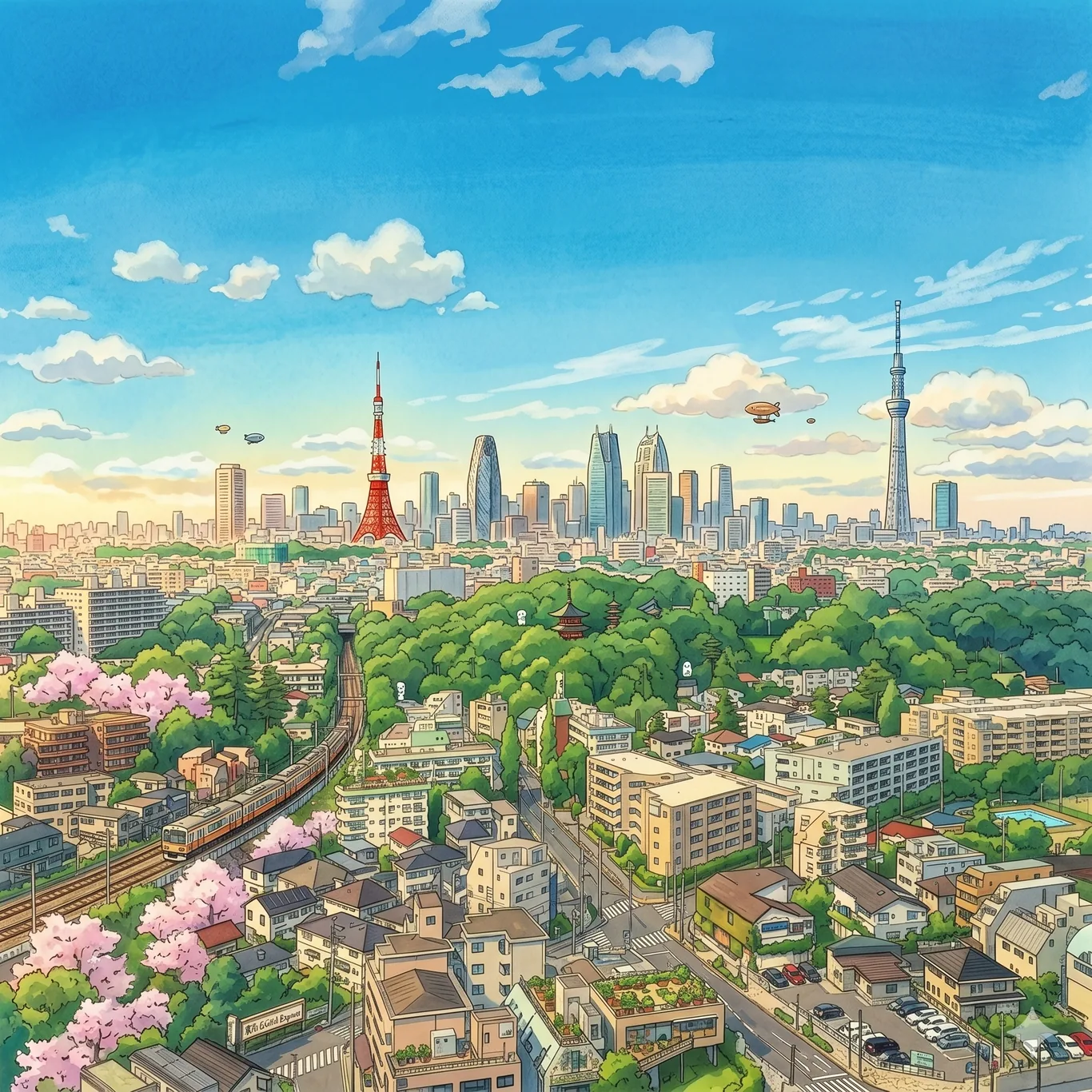
The name
The capital that moved east
Even the name is a small act of order. You may have noticed that "Tokyo" and "Kyoto" look like mirrors of each other, and the instinct behind that is half right, in a way worth getting precise about.
東 tō – east · 京 kyō – capital
京 kyō – capital · 都 to – metropolis, seat
The mirror is mostly a trick of the romanisation. The sound that actually repeats is 京 (kyō, "capital"), and it sits as the last character of Tokyo and the first of Kyoto. The two "to" sounds are entirely different characters: 東, east, in Tokyo, and 都, metropolis, in Kyoto. So it is not a true reversal. The real thread is that single shared character, the 京.
Here is the story underneath it. For more than a thousand years, Kyoto was the capital, the 京 itself. When the emperor's seat moved east to Edo in 1868, the city was renamed to say exactly what it had become: Tōkyō, the capital, now in the east. Kyoto was "the capital." Tokyo became "the eastern capital." (A piece of trivia the locals enjoy: Kyoto was never formally stripped of the title in law, so some still call it the sleeping capital.)
So much of mastery is learning which things are allowed to move, and which must stay fixed.
I think about that character more than I expected to. A capital can relocate. The buildings, the power, the centre of gravity can all shift hundreds of kilometres east. But the idea of a centre, the 京, survives the move intact. That is not a bad description of a craft, or a value, or a person who has decided what they are.
The architecture
How thirty-seven million people stay calm
A city this size should be chaos. The Greater Tokyo Area holds around thirty-seven million people, the largest urban agglomeration humanity has ever assembled. And yet it does not feel like thirty-seven million people. It feels organised, almost gentle. The reason is partly structural, and the structure is worth the rest of the world's attention.
Start with what "Tokyo" even means. To most people it means the twenty-three special wards, the dense core of roughly 9.7 million. But Tokyo Metropolis, written 東京都, is larger than that: those twenty-three wards plus twenty-six cities, five towns, and eight villages, spreading west into forested mountains and out across Pacific islands, for about fourteen million in all. The suffixes carry the whole administrative logic of the country:
The forty-seven prefectures are literally spelled by stringing the top four together: 都道府県, to-dō-fu-ken. And 中央 (chūō, "central") is not a tier at all, only a common place-name, as in Chūō-ku, Tokyo's central ward.
The crucial detail is that each of the twenty-three special wards is self-governing, with its own elected mayor and assembly, behaving almost like a small city in its own right. The system was fixed in 1947, after the old Tokyo City had merged with the prefecture into a single metropolis in 1943. So Tokyo is not one enormous machine. It is a federation of accountable parts, which is a very different thing to run, and a far harder thing to break.
largest on earth
special wards
to the second
on the streets
Then there is the plan itself, and four parts of it that the world keeps failing to copy. First, the railway is the skeleton, and the private companies that run the trains also build the stations, the department stores, and the housing around them. They earn money from ridership and from real estate, so they are paid to make density walkable and alive rather than dead and car-bound. Second, there is no single downtown. Shinjuku, Shibuya, Ikebukuro, Ueno: each is a centre, so the load is shared across many hearts instead of straining one. Third, the zoning permits mixing, which is why a noodle shop can sit under an apartment beside a small workshop beside a shrine. Fourth, the city is maintained, endlessly, in tiny increments, rather than left to decay and then demolished. That last habit has a name, and we will come back to it.
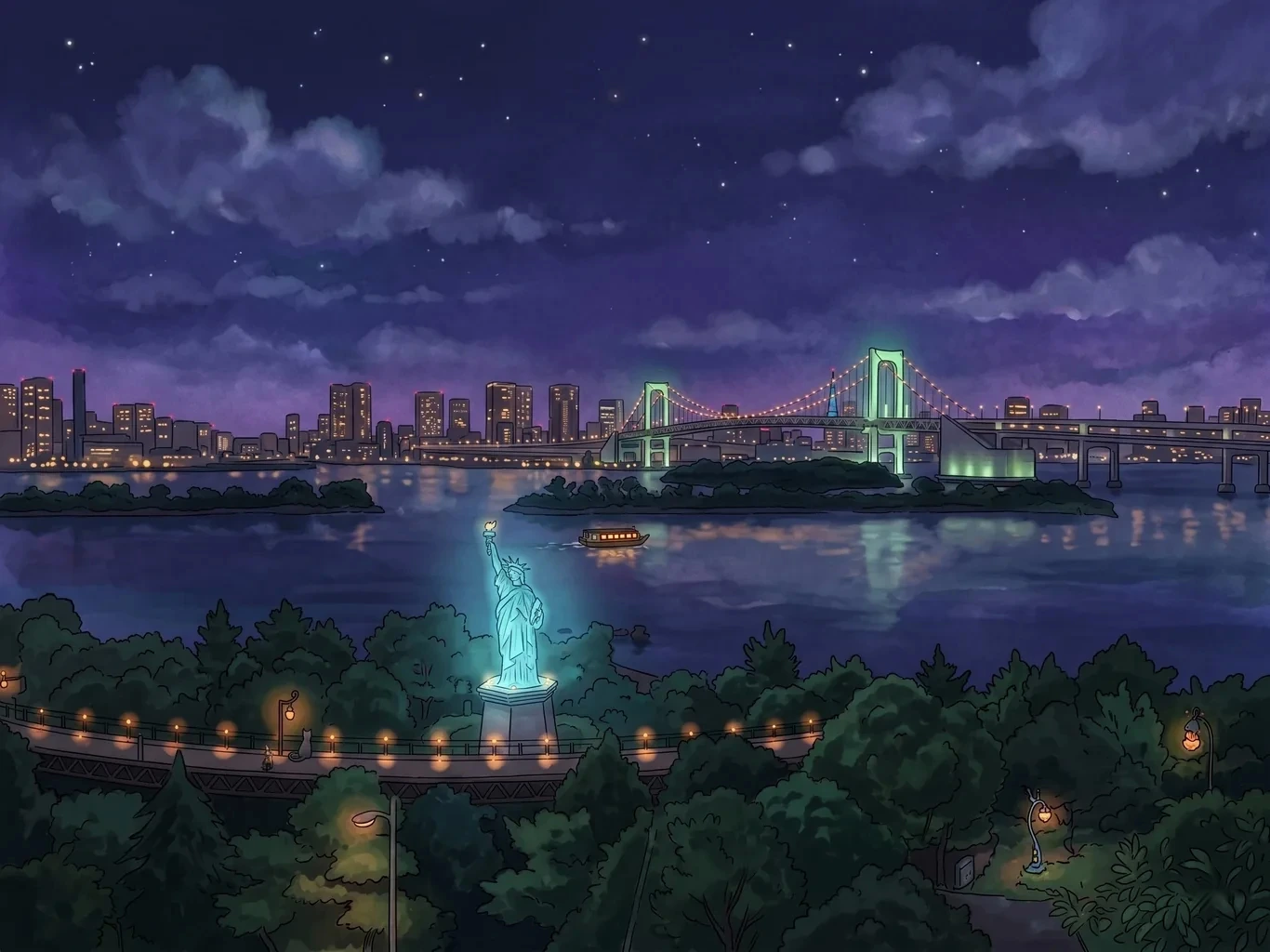
The discipline
A spotless city with nowhere to throw anything
Here is the detail that quietly undoes most visitors. There are almost no public bins anywhere in Tokyo. Many were removed in 1995 for security reasons, and they never came back. And the streets are immaculate. The contradiction resolves into a single civic agreement that no one signed and everyone keeps: you carry your rubbish home. No official enforces it. People simply do it, all day, every day, by the millions.
It starts young. Japanese schoolchildren clean their own classrooms, a daily ritual called o-souji. Cleaning is taught as character, not as a chore handed to someone beneath you. A nation that wipes its own floors at the age of seven does not drop litter at thirty. The handrail man with the white gloves was not an exception. He was the whole culture, made visible for a moment.
Convenience runs on the same logic of quiet, total reliability. The conbini, the convenience store, is a piece of genuine infrastructure: 7-Eleven, Lawson, FamilyMart, open every hour of every day, where you can pay a utility bill, draw cash, collect a parcel, eat something fresh and good, and use a toilet cleaner than most homes. And the trains run punctual to the second; if one is delayed, the railway hands out a printed delay certificate, a 遅延証明書, so you can prove to your employer that the lateness was not yours. On the platform, people queue inside painted lines without ever being asked to.
None of this appears in the tourist brochure under the word "excellence." But it is the purest demonstration of excellence I have ever lived inside. Here, excellence is not a performance you switch on for an audience. It is a public habit, practised by everyone, mostly unseen.
The release
Then, on a Sunday in May, the same city loses its mind
This is the part that took me longest to believe. The same man who queues in disciplined silence on Monday morning is, on the third Sunday of May, screaming himself hoarse beneath a portable shrine that weighs as much as a small car, soaked through, packed shoulder to shoulder with strangers, utterly unrestrained. The festivals, the matsuri, are the city's exhale. And there is one for nearly every turn of the year.
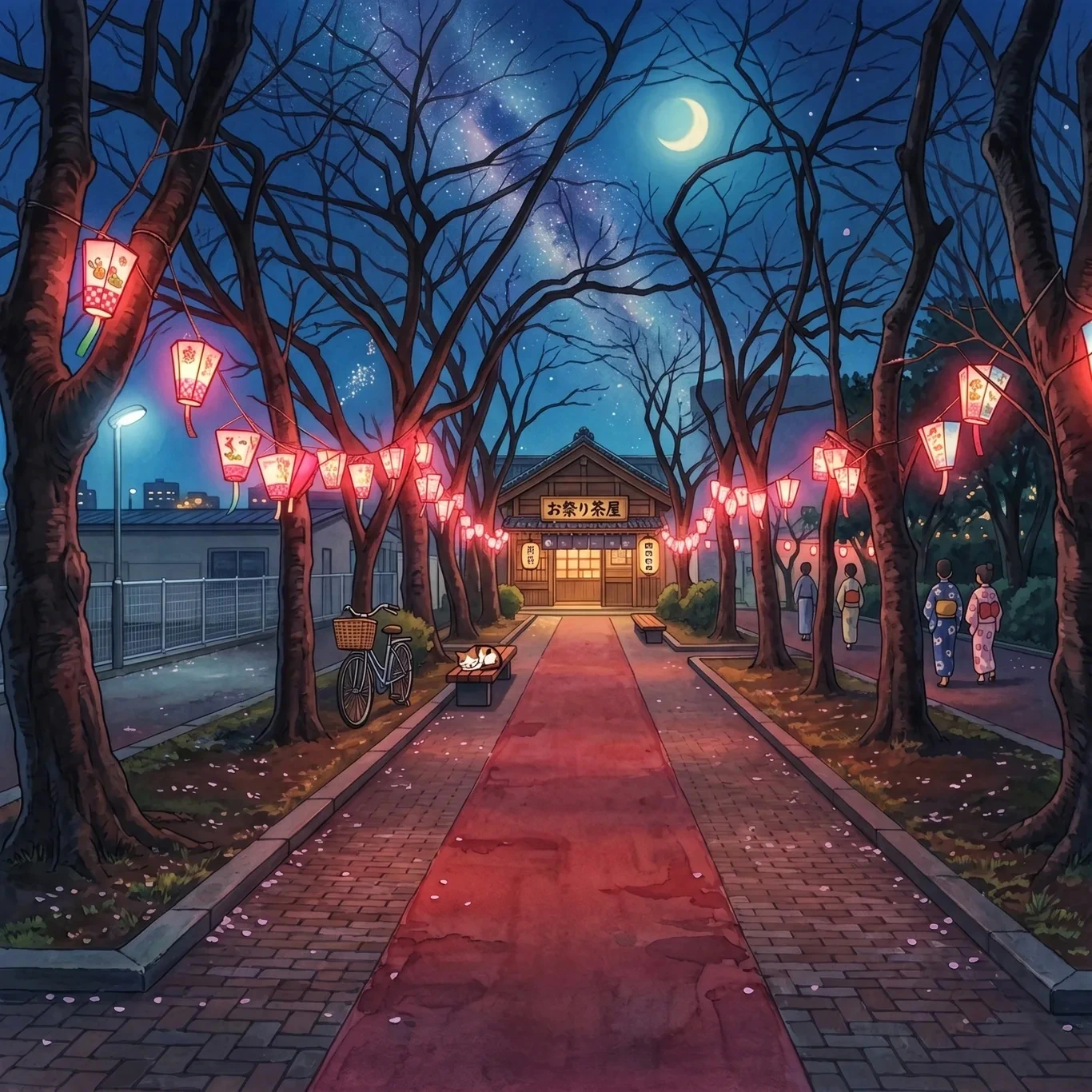
For a city so famous for its restraint, Tokyo grieves and celebrates more openly than anywhere else I have lived. And that is the whole secret. The order is what earns the release. You keep the platform spotless all year so that, one day in May, you are allowed to lose your voice under a shrine.
The method
Seven words I carried home
Live there long enough and you stop reading these as quaint cultural notes. They become tools. Seven of them followed me from Tokyo to Munich, and I still reach for them. Each one is really just something the city was already showing me, given a name.
The man wiping the handrail. The child cleaning the classroom. You take the hard way once a day, deliberately, because every time you skip it, skipping gets a little easier.
The city that is endlessly, invisibly maintained rather than left to rot. You do not need a new life. You need today to be slightly better than yesterday, and to not skip two days in a row.
The sushi master who shaped the same nigiri for sixty years, correcting details no customer would ever notice. Pick the one craft that actually matters to you, and let the four you are half-doing fall away.
The composure of this city in the face of earthquakes it cannot prevent. The blossoms will fall on schedule. You cannot stop them, so you sit beneath them while they last, and spend your effort only on the part you can actually move.
The blossom is most beautiful precisely because it is about to fall. Broken bowls are repaired with gold, so the crack becomes the most valued part of the object. Waiting for perfect is just fear wearing a respectable coat. Put it out; fix the rest later if you must.
The visual quiet of the streets. The cleared desk, the closed tabs, the apps you check for no reason. You clear the space so the festival has somewhere to happen. Your head goes quieter when your space does.
Dr. Shigeaki Hinohara saw patients until he was one hundred and five, because he had a reason to keep going, so he kept going. The eighty-year-old still shouldering the mikoshi in May has one too. On a bad day, a reason is the only thing standing between pushing through and quitting. Figure out yours before you need it.
Years later, in Munich, my three sons sometimes ask me what Japan was like. I tell them it was clean, it was kind, and the trains were never late. What I mean, and can never quite fit into the sentence, is that Tokyo showed me the shape of a good life: do the hard, quiet, unglamorous thing every day; keep your small corner of the world in order; and in return you earn the right to throw your whole heart, without restraint, into the few things that truly matter.
That is the whole of it. The city was the demonstration, the seven words are the method, and the reason you get up is the only question that finally matters.
– Khurram