Books that have shaped my thinking, sharpened my craft, and guided me through different seasons of life.
From a young age, books have been my sanctuary – an escape, a teacher, and a friend. I owe much of this to my father, who filled my early years with fairy tales, children's magazines, and moral stories.
Growing up as a sensitive, introverted kid, reading was more than a hobby – it was a gateway to understanding the world, and perhaps more importantly, myself. Moving to Japan was a pivotal moment. I was amazed to see commuters on trains – whether standing or sitting – completely engrossed in their books. That culture of reading was entirely new to me. It left a lasting impression.
Now in Germany, similar habits surround me. There is something magical about sitting in a cosy room by the window, with a cup of coffee, candlelight, and the sound of rain – immersed in a book. My collection spans partition history, self-development, psychology, software architecture, and philosophy.
The books I would hand to any engineer, architect, or builder who wants to understand how AI actually works – from the transformer internals to production deployment, from human collaboration to the ethical stakes. Organised by layer of the stack.
01
Jay Alammar's visual essays have taught more engineers to think clearly about transformers than any university course. This book extends that tradition – how tokenisation works, what attention actually does, how embeddings carry meaning. Practical, visual, and directly applicable to anyone building with LLMs.
Foundations
02
You only truly understand something when you can build it. Raschka walks through implementing a GPT-like model from first principles – attention mechanisms, context windows, training loops. The architecture stops being a black box. The moment context windows stop feeling mysterious is worth the read alone.
Deep Dive
03
Prompting well is a genuine skill with real structure. This is the most practical book on it – covering patterns, chain-of-thought techniques, and prompt design across different models and use cases. What you ask matters. How you ask it matters more.
Prompting
04
How to inject domain knowledge into AI models without retraining them – the full retrieval pipeline from embeddings to vector databases to chunking strategies. Essential for anyone building AI systems that need to know things beyond their training cutoff.
RAG & Knowledge
05
The most comprehensive treatment of building AI systems end-to-end. Covers infrastructure, APIs, tool use, evaluation frameworks, gateways, agents, and production deployment. If you read one book about how the modern AI stack fits together as a whole – this is it.
AI Engineering
06
The craft of keeping AI models working reliably after deployment – data pipelines, feature stores, model monitoring, serving infrastructure, and avoiding silent failures in production. The gap between a prototype and a production system lives in this book.
MLOps
07
The most thoughtful examination of what it means to work alongside AI – not just use it. Mollick, a Wharton professor who studies AI adoption closely, shows how to treat AI as a genuine collaborator. Essential for understanding what the agentic era actually demands from humans.
AI & People
08
The clearest account of why teaching AI systems to reliably do what we want is harder than it appears – and why the gap between a model’s behaviour and human intent can be catastrophic at scale. Essential reading before you deploy AI systems that make real decisions.
Safety & Ethics
09
One of the world’s leading AI researchers makes the case for building systems genuinely aligned with human values – and explains why current approaches have a structural flaw. The intellectual foundation for anyone serious about responsible AI thinking.
AI Alignment
10
DeepMind’s co-founder charts what happens as AI and synthetic biology converge – not a doom scenario, but an honest mapping of the decisions governments, companies, and engineers need to make now. The strategic overview that puts every architecture decision in context.
AI Strategy
11
Traces the real cost of AI systems – the energy, the data labour, the supply chains, the power structures. For architects deploying AI at enterprise scale, understanding these dimensions is part of responsible system design, not a separate conversation.
Power & Governance
01
How non-conformists move the world. Reinforced my belief that the most valuable ideas are the ones that feel uncomfortable at first.
Leadership
02
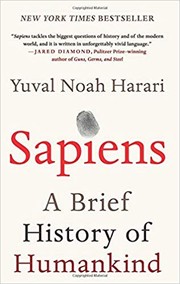
A humbling lens on human history. Puts every career milestone, every architectural decision, every ambition into breathtaking perspective.
History & Philosophy
03
The science of tiny changes and compound improvement. The foundation of how I build discipline – in engineering, in learning, in life.
Self-Development
04
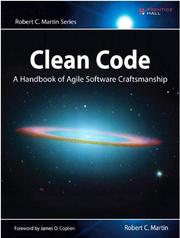
The bible of professional software craftsmanship. I return to its principles every time I review code or mentor an engineer.
Engineering
05
A powerful Pakistani narrative connecting personal resilience with national identity. It speaks to the grit in my roots.
Identity & Resilience
06
Reframed how I think about leadership and legacy. We are not playing to win – we are playing to keep playing and keep improving.
Leadership
07
The Japanese art of finding purpose. This book helped me consciously define what happiness means for my family and myself.
Purpose & Wellbeing
08
A vivid case for owning your mornings. My daily rituals, continuous learning habit, and early-hour focus all owe something to this book.
Discipline
09
Timeless wisdom on the art of professional programming. Shaped my engineering instincts more than any framework or tool ever has.
Engineering
10
A practical guide to the skills that matter most in leadership. High EQ, I believe, matters more than high IQ in almost every real-world situation.
Leadership & EQ
11
A sobering reminder that success is rarely as deliberate as we think. Humility about luck is the first step toward genuine wisdom – in markets, in careers, in life.
Probability & Thinking
12
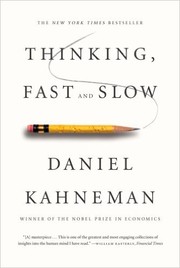
The book that revealed the invisible architecture of decision-making. System 1 vs System 2 thinking changed how I approach technical choices, team dynamics, and risk.
Psychology
13
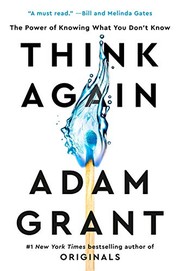
A masterclass in intellectual humility. The best engineers I know share one trait: they are willing to be wrong. This book explains why that's so rare – and how to cultivate it.
Mindset
14
Why good companies fail when disruption arrives. Essential reading for any cloud architect navigating legacy systems and the relentless pace of technology change.
Innovation
15
Decision quality is not the same as outcome quality. This reframe changed how I evaluate architectural decisions – especially the ones that don't go as planned.
Decision Making
16
How to be genuinely less wrong over time. The calibration techniques here directly informed how I think about risk, estimation, and uncertainty in cloud architecture.
Forecasting
17
Smart people make systematic errors – and intelligence can actually amplify those errors. A necessary corrective for anyone who considers themselves an expert.
Critical Thinking
18
Talent is overrated. Sustained passion and perseverance – applied consistently over time – produce more extraordinary outcomes than any natural gift. A lesson Pakistan taught me early.
Resilience
19
"Follow your passion" is terrible advice. Rare and valuable skills create rare and valuable careers. The craftsman mindset, articulated perfectly.
Career & Craft
20
The companion to Clean Code that operates at the system level. Separation of concerns, dependency rules, and architecture boundaries – principles I apply every day in cloud system design.
Architecture
21
Before strategy, before roadmaps, before architecture – ask why. This book gave me language for something I always felt: purpose-led work produces better systems and better people.
Leadership & Purpose
22
A childhood fascination that never left. Engineering precision, aerodynamic mastery, and the relentless pursuit of performance – lessons that apply as much to cloud systems as to aircraft design.
Engineering & History
23
A masterclass in data literacy and fighting our instinct to catastrophize. Rosling's ten instincts that distort our worldview belong on every engineer's and leader's reading list.
Data & Worldview
24
Counterintuitive and sharp. Choose what genuinely matters and protect your energy accordingly. One of the most honest self-help books ever written.
Philosophy & Mindset
25
The career map I wish I had when I started. From junior to staff engineer – practical, honest, and grounded in how real engineering careers actually progress.
Career & Growth
26
More than interview prep – it sharpened my problem-solving instincts and reminded me that clarity of thought under pressure is a craftsman's core skill.
Engineering
27
A fable about what truly matters. Read it twice – once for the story, once for the philosophy. A reminder that the greatest architecture you can build is the architecture of your own life.
Purpose & Wellbeing