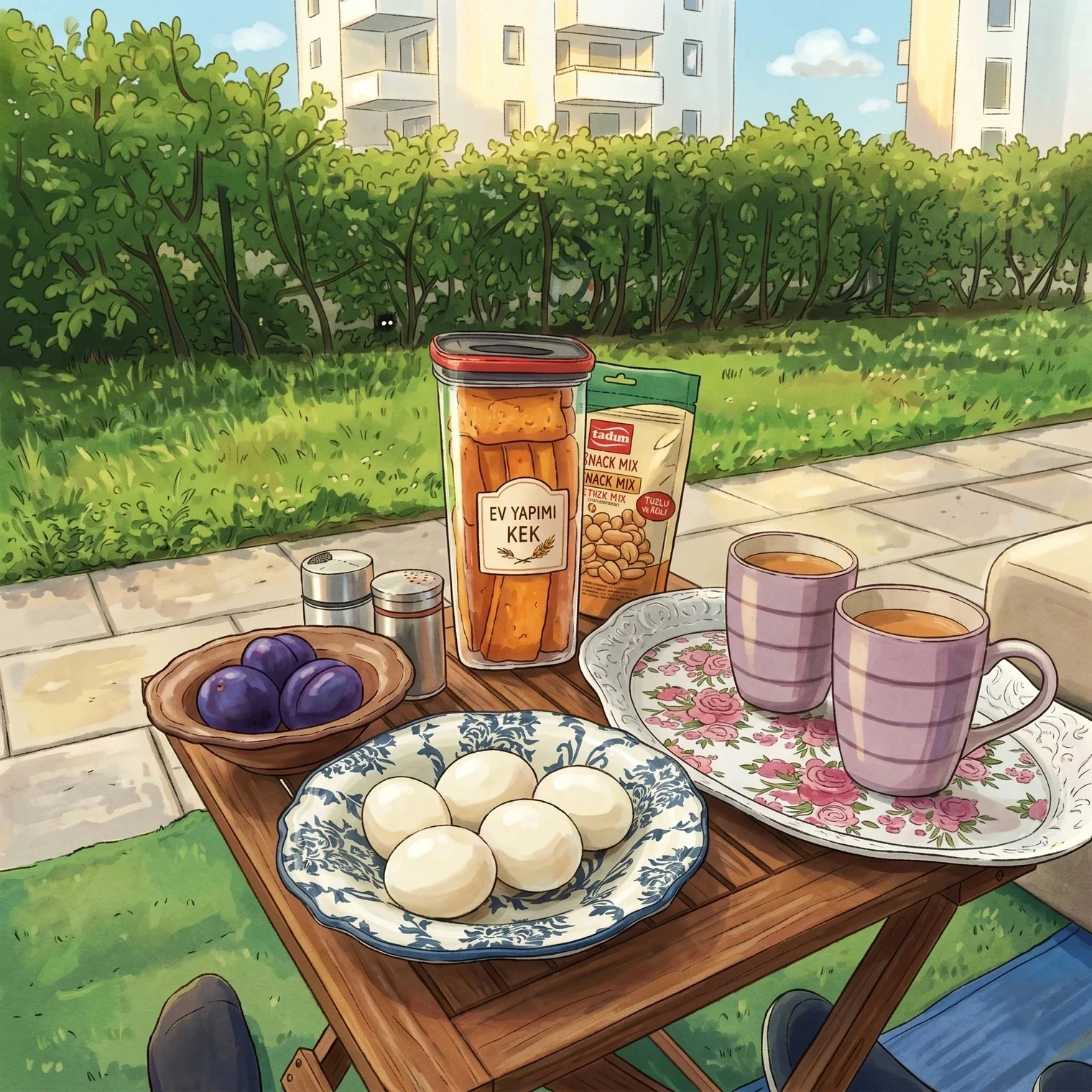
By five o'clock, both of us have started drifting toward the back door. There are two chairs in the garden, a pot of tea between them, and an hour with nothing in it. My wife and I sit out there most evenings and talk about nothing in particular: the day, a small joke, something one of us read. We wait for that hour all day.
Nothing is produced in it. No task is finished, no problem solved, no message answered. By every measure I was raised to respect, it is an hour of doing nothing. It is also, most days, the best hour I have. The Italians have a phrase for it: dolce far niente, the sweetness of doing nothing. Where I grew up, doing nothing was never sweet. It was a failure of character.
Busy Doing What?
In Pakistan, and across much of South Asia, your worth is measured young by how occupied you are. The child is expected to study, the student to excel, the employee to stay late, the parent to sacrifice. Stillness gets read as laziness and busyness as virtue. I carried that arithmetic for most of my life, into every role and every country, and it took me years to notice that the hour I now guard most fiercely is the one that produces nothing at all.
We have become very good at filling time and very poor at asking what we are filling it with. We scroll while we eat, answer messages at dinner, and live through today while rehearsing tomorrow. Even our rest has been put to work. We listen to podcasts to learn, exercise to optimise, read to gain an edge. Every hour is asked to justify itself, to show a return. The hour in the garden refuses, and that refusal is the whole point of it.
The Only Time the Engine Idles
There is a real difference between being inactive and being at peace, and most of us only know the first. We put the body down and let the mind keep running. We call it rest, but the engine never idles. That hour outside is the one time mine actually does. It is also, and not by accident, where the day's best thinking tends to arrive, the small clarities that never show up while I am trying to force them. Creativity rarely arrives on command. More often it arrives in the space we forgot to fill.
We have become experts at consuming the thoughts of others, and strangers to our own.
When the Small People Arrive
Our boys join us sometimes, and I love that they want to. But the moment they do, the calm hour becomes a different animal entirely. Three of them arrive with the energy of a day that is only getting started, and the two of us are running on the last quarter of the tank. We cannot match them, and after a while we stop trying. The tea goes cold. The quiet becomes noise, the noise becomes laughter and complaint and someone urgently needing something. It is its own kind of sweetness. It is simply not the one we sat down for.
I know how this story ends. We are raising them to leave, and one day the garden will be quiet again in a way we did not choose. So I try to hold both versions of the hour as they are: the still one we wait for, and the loud one that interrupts it. Both are running out, only at different speeds.
What Living Abroad Taught Me About Rest
I had to cross three countries to relearn what that hour already knew. Japan, where I expected only relentless efficiency, keeps an entire aesthetic built around the pause: the turning of the seasons noticed on purpose, an afternoon given over to watching cherry blossom fall, a cup of tea treated as an occasion rather than a refuel. Presence there is not stolen from productivity. It is part of the design, and it taught me that gratitude and attention are practices, not moods.
Germany taught me the same thing in a colder, more structural grammar. Sundays are quiet by law and by habit. The shops close, and the day is handed back to you whether or not you feel you have earned it. At first the silence unsettled me, because I had spent years tying my worth to motion. It took me a while to understand that the pause was the point, and longer still to build one into my own evenings.
The deeper gift is the balance underneath it all. A working life here leaves you with enough of yourself at the end of the day to be a husband and a father, and not just a tired man in the same house as them. The best of it arrives in summer, when the light stretches until almost ten and the tea in the garden has no closing time. We sit out there long after the cups are empty, in no hurry to go in.
The Courtyard, Relocated
The strange part is that none of this is new to me. I grew up around it and then mislaid it for twenty years. The older generation in South Asia understood the garden hour without ever needing a word for it. People sat in courtyards after dinner with nowhere to be. Neighbours arrived without appointments. Conversations wandered without an agenda and without needing a conclusion. Tea was never only tea. It was a pause, a space between obligations, a small daily admission that life as it already was could be enough.
Two chairs in a German garden, a pot of tea, an hour we defend against everything: it is the same courtyard, carried across three countries and set down again. I did not invent the ritual. I only remembered it, and gave it back its hour. We have more convenience than any generation before us and less ability to sit still for ten minutes, and the cure turned out to be the oldest thing I knew, and the simplest: two people, fully present, with nowhere else to be.
Taking the Hour
Life is not a contest to maximise output. No one reaches the end of it wishing they had answered more emails or sat through more meetings. People wish they had taken the hour. They wish they had watched more sunsets, taken longer walks, read one more book for the pleasure of it, and sat with the person they love while the tea went cold and the light went down.
The sweetness of doing nothing is not laziness. It is the quiet refusal to believe that our worth comes only from what we produce. The most important hour of my day makes nothing at all, and we wait for it from the moment we wake.
Dolce far niente is not an excuse to do less. It is permission to sit in the garden at five o'clock, let the tea go cold, and be present for the life that is already here.