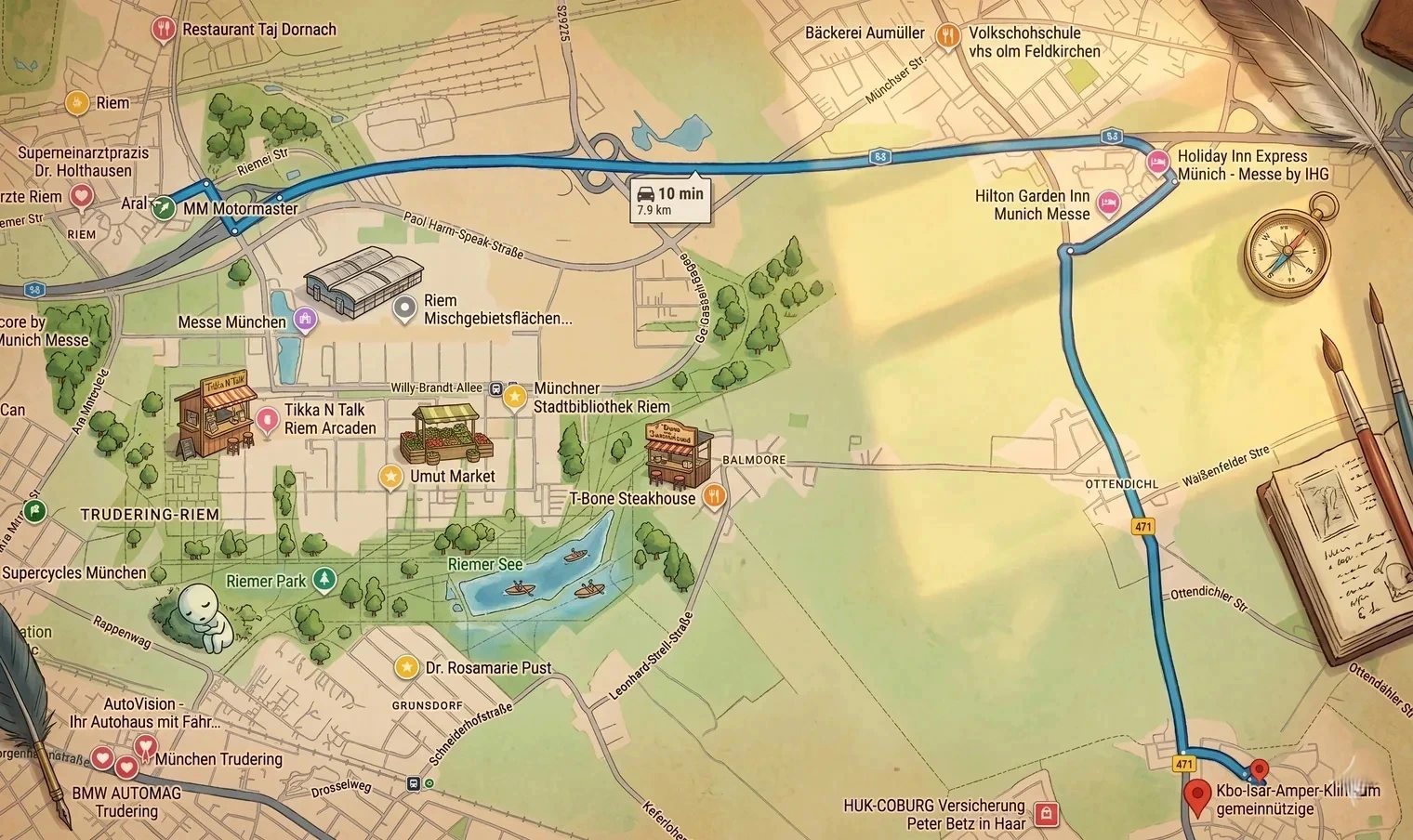
It was an ordinary afternoon on the B304, the highway home, after coffee with my wife. The tank was low. For no reason I can name, I passed the row of stations on the main road and pulled into the small one near our home, close to Riemerstrasse in Riem. The one I almost never use. No reason, no urgency, or maybe fate wearing ordinary clothes.
As I was filling the tank, a man approached me. His voice was calm and his eyes were polite, a little worried but composed. He introduced himself softly: a doctor and a professor at Ludwig-Maximilians-Universitaet Muenchen, one of Germany's most respected universities. His S-Bahn had been delayed, he had missed a connection, and twenty minutes had quietly slipped away from him.
He was due to give a lecture at the kbo-Isar-Amper-Klinikum in Haar. Fifty young doctors were sitting in a hall waiting for him to begin at four o'clock. There was no taxi in sight and no Uber coming, and the clock on the pump read 3:43. In Germany, time is rarely just time. It is a way of showing respect, of keeping trust, of revealing character. He could feel all twenty of those lost minutes as something heavier than minutes.
He asked, almost hesitant to impose, whether I might be able to help. I said, "Why not. I will drop you there." I knew the place well; it is one of the main hospitals near our home, a short run down the road.

The Drive
We pulled out and the city began to move past the windows, from Riem toward Haar, but inside the car there was a strange stillness. It was the quiet that settles when two strangers meet not quite by chance.
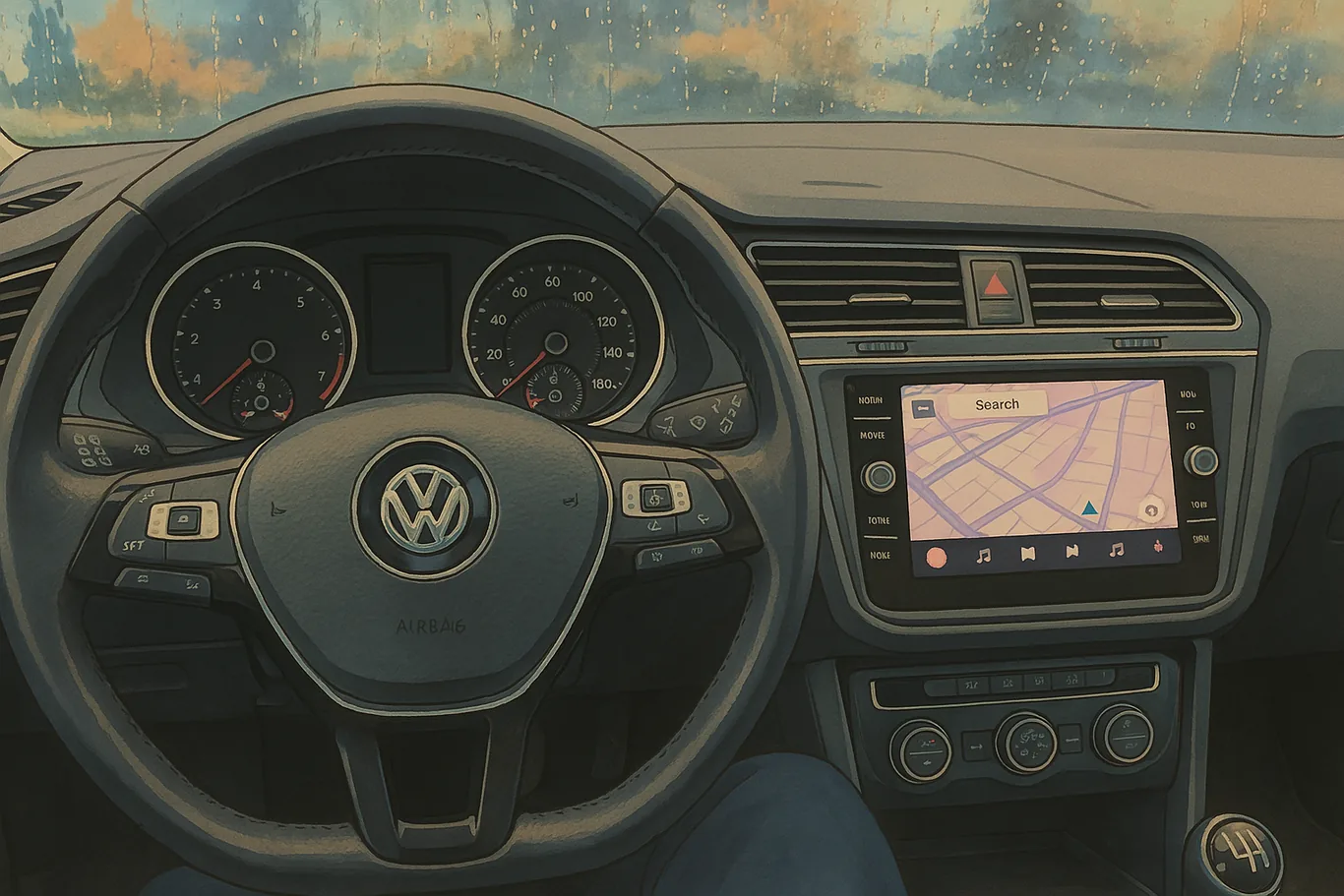
He talked as I drove. About medicine, about teaching, about the weight of being responsible for what younger doctors carry out into the world. He said that knowledge, when it is shared honestly, does not just make more capable doctors. It makes kinder ones. And then he said the thing I have not been able to put down since.
If you are not kind, no matter how expert you are, you cannot be a great doctor.
I listened, and somewhere between a set of traffic lights and a turning lane, something quietly rearranged itself in me. I was not simply driving a person to an appointment. I was carrying his knowledge, his sense of responsibility, and fifty unseen faces waiting in a lecture hall for a teacher who had almost not made it.
On Time
We arrived at 3:56. Four minutes to spare. He thanked me with a dignity that stayed in the car long after he had stepped out of it and walked toward the hall.
I have kept thinking about him since. About how helpless he must have felt on that platform, watching the connection go. About how help arrived from nowhere, through a near-stranger at a petrol station he had no reason to expect anything from, the one I had no reason to choose. We rarely notice the moments when we become bridges for one another. They are small and they are over quickly, and only afterward do you feel how far they might reach. I have written before about how a country reveals itself in small daily things, and this was one of them: in a place where being on time is a quiet form of respect, I had not really dropped a professor at a hospital.
I had helped respect arrive on time. And that, quietly, felt like an honour I had not earned and was grateful to be handed. It is the same thing Japan first taught me about gratitude being something you practise rather than feel, met again on a German afternoon I will not forget.